

TASAI Mozambique Dissemination Workshop
September 3, 2022
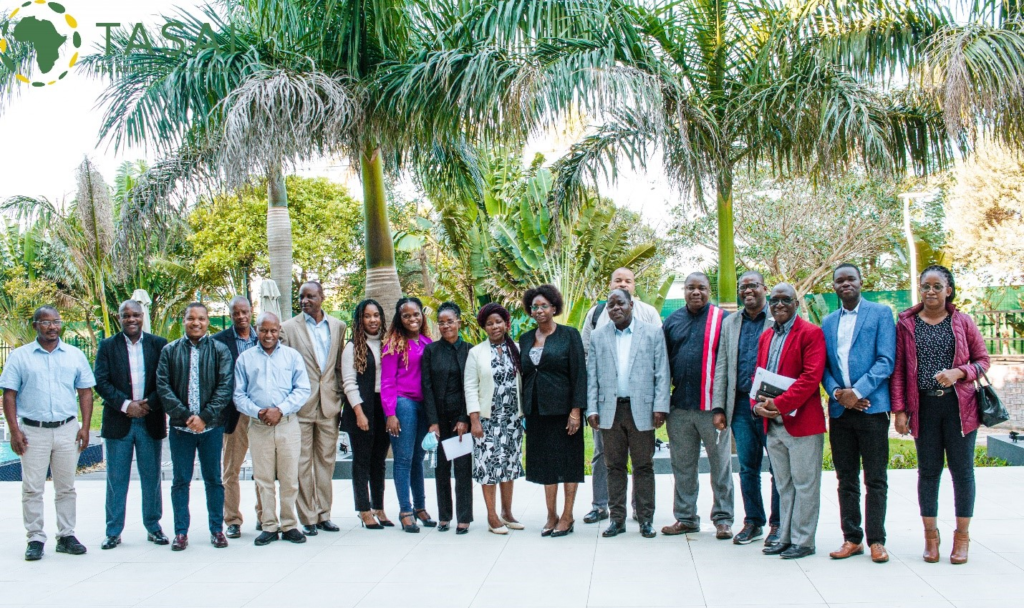
In July 2022, TASAI wrapped up its series of 2021 country studies with a dissemination meeting in Maputo, Mozambique. As he made his way around the most populous city in the country, Michael Waithaka (TASAI’s Chief Editor) was in awe of the new building which houses the Ministry of Agriculture and Rural Development (MADER). “It was hard to miss,” Waithaka reflected. He wondered, “why make such an investment for the sector?” When public and private seed sector stakeholders gathered at the Radisson Blu Hotel to disseminate the 2021 study findings, Waithaka understood that the radiant architecture behind MADER’s building served as a testament to the government’s “commitment” and “readiness” to develop the country’s agricultural and seed sectors.
For Brian Damba (TASAI’s Data Analyst), the meeting in Mozambique was a chance “to give participants a voice into the study [and story] of seed systems.” Drawing on insights from the participants, Damba found the meeting to be introspective – vibrant with input, feedback, and policy-relevant questions. He sensed there was a strong collective “outcry for data” in Mozambique. This demand for seed industry data showed Damba that data science was at the very cornerstone of TASAI’s footprint. In reflection, Damba described TASAI as a data-driven platform to “transform seed industries in Africa through advocacy and policy interventions.”
While engaging with various public and private actors in the dissemination meeting, both Damba and Waithaka learned that the notion of “cross-country competition” was attractive to participants. Stakeholders were pleased to read a report that demonstrated Mozambique’s progress. But they were even more keen on seeing comparisons with neighboring countries – “they wanted to know how others [were] doing”, as Waithaka explained. On behalf of TASAI, Damba and Waithaka offered participants a first look at TASAI’s newest interactive visual tool, the TASAI Country Dashboard, which sheds light on these comparative questions. The Dashboard displays seed industry data by country, by year, and by focus crop.
Participants at the meeting acknowledged that Mozambique does have superior [improved seed] varieties; the issue lied not in whether these varieties existed. The challenge was that the variety release process – those steps required to get those improved seed varieties on the Official List of Varieties – was not smooth. Waithaka shared that he “could feel the pride of the country in that they feel they have something they can offer”. He understood that they wanted evidence that supports “how they could share with other countries; how they could put something on the table.” Mozambique remains optimistic about its contribution to this table, that is the movement to improve smallholder farmers’ access to seed in sub-Saharan Africa. Results from the Mozambique study were validated by local seed industry stakeholders. The 2021 TASAI Mozambique Country Report, is accessible here.
re findings were validated and discussed by members of Mozambique’s public and private seed sectors.